Category: Dental care

  • Our solutions to overcome your fear of the dentist

    Our solutions to overcome your fear of the dentist

    958 Views

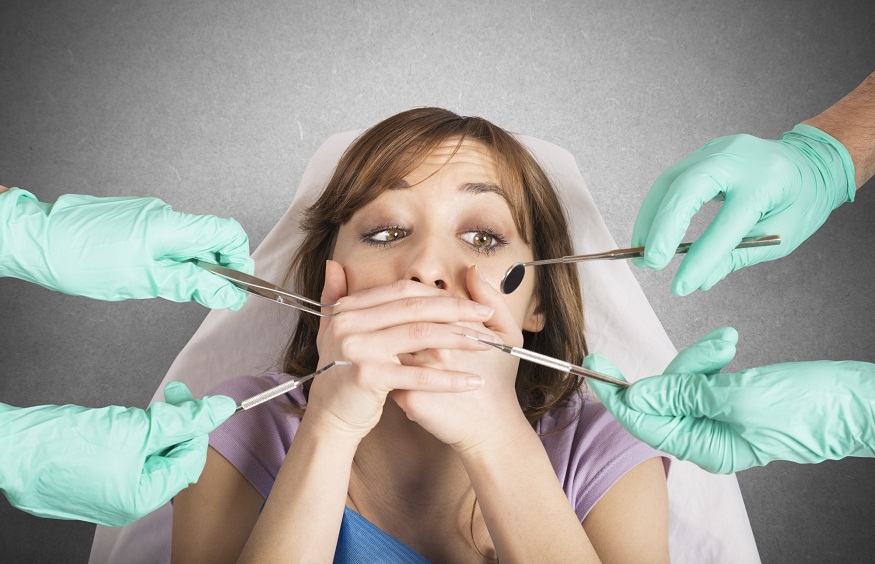
    Fear of the dentist goes by many names. From dentophobia to stomatophobia for the most developed cases, this apprehension of dentists can have serious consequences on your health in general.

    In this article, the specialists at our dental clinic in Montreal show you how to overcome your dentist phobia with a few simple tips.

    What is dentophobia?

    Dentophobia (or fear of the dentist) refers to the anxiety that some people may feel about visiting their dentist or receiving dental care.

    The causes of dentophobia vary from one individual to another and are often wrongly considered irrational, as people sometimes have difficulty putting their fear into words.

    You should know that fear of the dentist is a widespread phenomenon. It is estimated that around 30% of patients suffering from a fear of dentists have experienced a traumatic event during dental treatment in their childhood.

    If you are in a dental emergency situation , but you are still hesitant to make an appointment. Or if you have to muster up all your courage to walk through the door of your dental clinic. Know that you are not alone and that solutions exist to overcome your fear.

    What are the signs of dentist phobia?

    Dentist phobia affects children and adults and generally manifests itself as temporary anxiety and a certain amount of apprehension. Here are some signs:

    You suffer from insomnia the day before your dentist appointment.

    You experience a feeling of “  dry mouth  ”.

    You feel an increase in your heart rate and physical discomfort at the thought of having a procedure, even if it is a simple dental exam .

    You avoid your routine visits.

    You frequently postpone your appointments for fear of seeing your dentist.

    You neglect your dental problems, even when they cause toothache .

    Fear of the dentist can be a real obstacle to adequately monitoring the oral health of those affected. If you think you are suffering from it, it is important to find solutions to your discomfort so as not to compromise your health.

    How to stop being afraid of the dentist?

    Different solutions are available to you if you want to overcome your fear of the dentist.

    You will find something for all affinities depending on your preferences. After discussing it with a health specialist, nothing prevents you from combining several in order to put all the chances on your side.

    Discuss your fears with your dentist

    The simplest solution to knowing how to stop being afraid of the dentist is… simply to talk about it with him/her. Your dentist is in fact the person best able to understand your feelings and ensure that your experience is as pleasant as possible.

    Verbalizing your fears is undoubtedly an essential step towards appeasement. Discussing your concerns openly with your dentist is therefore the best way to put an end to your fear.

    At the Mont-Royal Dental Center, our dentists are used to caring for patients who are anxious at the mere thought of receiving dental care . By showing empathy and being attentive to the stress you may be feeling, your dentist will be able to adapt to your situation and be very careful with you, without any judgment. If necessary, he or she may also prescribe medication to help you reduce your apprehension.

    It is also interesting to share your possible bad past experiences, to go to the appointment accompanied by a friend or to set up a signal between you and your dentist.

    Medications and conscious sedation

    Medications with anxiolytic or relaxing properties can also help reduce your fear of the dentist. Medicinal solutions exist, but must be prescribed by your dentist in advance of your appointment. These can generally be taken the day before the consultation or during it, or both.

    In addition to medications, conscious sedation based on nitrous oxide (the “famous” laughing gas) can be used. The principle is simple: just breathe this anxiolytic gas and after a few minutes you will feel completely relaxed. One of the main advantages is the absence of side effects, with the effects fading within minutes.

    Another type of conscious sedation can be achieved intravenously by administering an anesthetic based on morphine derivatives.

    In both cases, this approach simply reduces the patient’s fear and limits pain, such as that of the injection or that caused by the instruments.

    General anesthesia

    When the fear of the dentist is paralyzing and none of the previous solutions seem to work, more significant solutions can be put in place.

    In certain situations, general anesthesia may therefore prove necessary to preserve the oral health of patients. However, this will only be offered in the event of hospitalization and serious intervention requiring, for example, complex tooth extraction .

    Use hypnosis

    Increasingly used, even in the field of medicine, hypnosis can be the solution to help you overcome your fear of the dentist.

    This is a gentle method capable of helping you overcome many fears and apprehensions.

    Contrary to some popular beliefs, hypnosis cannot be imposed on you. For this to work, you need to be receptive to it and open to being hypnotized.

    Some studies recommend hypnosis to treat many fears and phobias, such as that of heights, animals or even the dentist.

    Use acupuncture

    Acupuncture is perfect to use alongside hypnosis or to incorporate into your routine before your visit to your general dentist .

    Although it is mainly known for its analgesic value, that is to say, short- and long-term pain relief, acupuncture is also relaxing .

    Using acupuncture means benefiting from a sedative and calming effect, by acting directly on brain activity. Thus, your stress decreases and at the same time, so does your fear of the dentis
  • Why are we afraid of the dentist and how to relax before a visit?

    Why are we afraid of the dentist and how to relax before a visit?

    969 Views

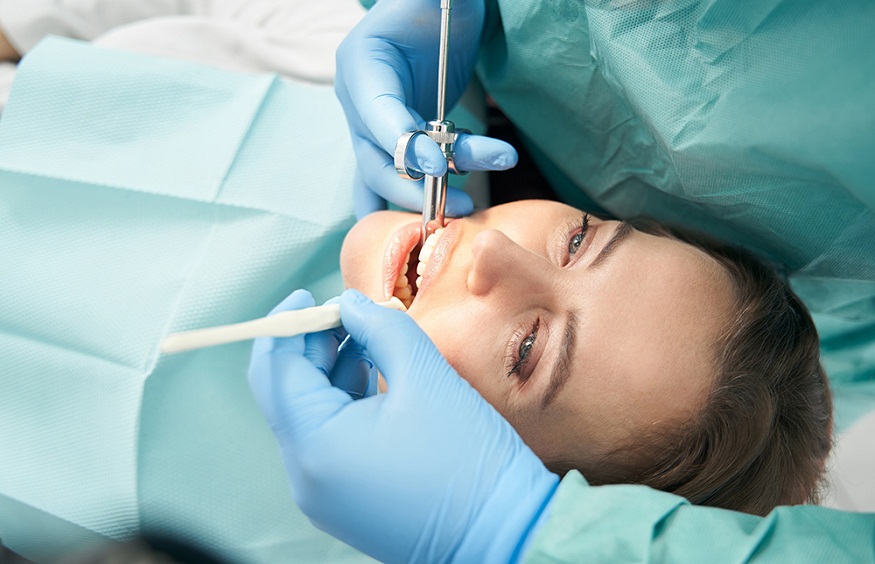
    Does your heart race at the sound of the dentist’s drill? You are surely part of the 33%* of French people who fear entering the door of a dental office. The thought of pain often even leads to canceling or postponing a medical appointment. However, neglecting your oral care increases the risk of developing cavities and gum disease, or even more serious infections. Where does this fear of the dentist come from and what techniques allow you to relax before a consultation ? Discover the mechanisms of dentophobia and ways to relieve it in this article.

    Understanding the vicious cycle of stomatophobia

    What causes anxiety during a medical visit to the dental office?

    Many factors can cause stress when approaching a consultation. The fear of the dentist is anchored in the collective unconscious with the image of the tooth puller or through pictorial and cinematographic works. Dentistry techniques evolved a lot since the time when teeth were extracted in front of an audience during a theatrical performance and without anesthesia. The drill has been abandoned in favor of quieter tools and advanced dental surgeon training.

    Anticipation of pain remains the main vector of anxiety in dentistry . A dental past experienced as traumatic, particularly during childhood, could anchor an unpleasant memory. The senses also play a major role since the smell of products or the sound of instruments arouse negative emotions. Finally, the environment, with the waiting room, can contribute to a feeling of discomfort in a patient who is already alert and concerned about future care.

    How do patients’ anxieties regarding oral care manifest?

    Fear of the dentist induces hormonal activation that stimulates certain organs and inhibits others. Physiological signs include :

    an increase in respiratory rate and dilation of the bronchi.

    Body language also conveys its share of clues about your anxious state. The look, vector of emotions, often reflects the apprehension felt in the chair. The facial expression is revealing, as are the hands gripping the armrests. Sudden gestures, sometimes uncontrolled, show serious concern. Among the cognitive effects , hyperactivity, the inability to put procedures into perspective or the fact of bombarding the practitioner with questions indicate anxiety. A trembling voice, stuttering or rapid speech also indicate detectable discomfort.

    What are the consequences of a dentist phobia on oral hygiene?

    The fear of a dental office visit leads patients to postpone their appointments. However, these cancellations are not the result of optimal oral health. If care is not taken to preserve the well-being of the teeth , problems may appear or worsen. A simple cavity can develop into a toothache or lead to an abscess.

    Delaying treatment increases the worsening of symptoms and treatments focused on the pain rather than their causes, as well as self-medication. This vicious cycle was highlighted in the study exploring the links between dental hygiene and anxiety by Jason M Armfield, Judy F Stewart and A John Spencer.

    In addition, negative emotions such as shame or guilt can paralyze the patient who has postponed his consultations. The deterioration of oral health therefore becomes an additional reason for not pursuing care. SM Cohen, J Fiske and JT Newton revealed that dental anxiety has a significant impact on daily life . In addition to disrupting sleep, it can hinder your professional and personal social relationships.

    However, solutions exist to reduce anxiety-provoking stimulation and make you want to visit your dentist!

    Overcoming fear of the dentist with virtual reality

    Defusing panic attacks: relaxation techniques that relieve fear of the dentist

    Using music therapy to relax in the operating chair

    Sounds are a vector of tension or serenity. As we have seen, the dental environment can cause discomfort because of the noises that characterize it. In order to divert your attention from these notes, music therapy occupies the hearing to bring about greater well-being .

    Music has healing and calming properties . Its impact on the emotionality of listeners can thus lead to deep relaxation. The work of Maurice Gabai and Jacques Jost is revealing on the soothing effect of auditory stimulation. In odontostomatology, this therapeutic approach takes on its full meaning to create a safe space and promote relaxation. A victim of intense emotional value, it raises the barriers of verbal language and releases muscular tensions.

    Practicing hypnosis throughout the consultation with a dental surgeon

    It was the Scottish doctor J. Braid who introduced the technique of hypnosis to France through the fixation of shiny objects in 1841. Its main application was hypnoanalgesia and developed in the middle of the 19th century. This state of conscious trance is achieved through suggestions.

    The patient, awake throughout the process, is invited by mental images and indications from the practitioner to relax. Your attention then focuses on your inner world and no longer on external stimuli. Dentists trained in hypnosis thus lead to a modified state of consciousness in order to better experience oral care .

    Try acupuncture to release nervous tension

    Coming from a branch of traditional Chinese medicine, acupuncture stimulates certain points of the body in order to restore the circulation of energy. Needles are thus placed on precise locations in order to eliminate blockages and restore balance.

    According to a study conducted by the medical journal European Journal of Integrative Medicine, acupuncture can treat dental anxiety . Researchers from the University of York in the United Kingdom analyzed six therapeutic trials involving 800 patients. Using a points scale, they were able to observe a significant reduction in stress . Although further research is needed, these initial results present acupuncture as a relevant accompaniment treatment to calm down and overcome the fear of the dentist.