Category: Surgery

  • Spinal Biomechanics for Effective Spinal Fusion

    Spinal Biomechanics for Effective Spinal Fusion

    1,213 Views

    Spinal fusion surgery is a vital procedure for treating a range of debilitating spinal conditions, including degenerative disc disease, scoliosis, spinal instability and fractures. The success of this complex operation largely depends on the surgeon’s deep understanding of spinal biomechanics—the study of forces, mechanical structures and motion within the spine. As a complex, dynamic system, the spine not only supports the body’s weight but also allows for essential mobility and flexibility while safeguarding the spinal cord. Dr. Larry Davidson, a leading authority in spinal surgery, has seen that a comprehensive grasp of spinal biomechanics enables surgeons to make precise, data-driven decisions, optimizing fusion outcomes, minimizing complications and enhancing patient recovery. As advancements in technology like AI continue to provide more insights into spinal mechanics, surgeons are even better equipped to achieve lasting, successful results for their patients.

    The Importance of Spinal Biomechanics in Fusion Surgery

    At its core, spinal biomechanics involves understanding how the spine moves, bears weight and responds to various forces during physical activity. This knowledge is crucial for effective spinal fusion surgery because it helps ensure that the procedure restores stability to the spine without compromising its natural function. Spinal fusion aims to eliminate motion between two or more vertebrae, which can relieve pain and stabilize the spine. However, it also alters the way forces are distributed across the spine. Without a thorough understanding of biomechanics, these changes can result in complications, such as adjacent segment disease, where the segments next to the fused vertebrae undergo abnormal stress.

    By comprehending how the spine functions as a biomechanical system, surgeons can better predict how the fusion will impact both the fused segment and the rest of the spine. For instance, they can determine the optimal placement of implants, rods and screws to restore proper alignment and distribute mechanical forces evenly. This reduces the risk of complications, promotes proper healing and ensures that the surgery achieves long-term success.

    Key Biomechanical Concepts in Spinal Fusion

    Understanding key biomechanical principles is essential for the success of spinal fusion surgery. Load-bearing and distribution: The spine supports body weight, and spinal fusion alters how loads are shared, making it critical to prevent strain on adjacent segments. Motion and stability: While fusion sacrifices motion in a segment, careful planning is required to preserve mobility in the rest of the spine. Alignment and curvature: Maintaining or restoring the spine’s natural curves is crucial for balance and minimizing postoperative discomfort. Stress and strain: The spine endures daily forces, and surgeons must ensure the fusion remains stable under these stresses, using biomechanical data to select appropriate materials and techniques.

    Biomechanical Challenges in Spinal Fusion

    Despite advancements in spinal fusion, challenges like adjacent segment disease (ASD) persist. ASD occurs when increased stress on segments near the fusion site leads to faster degeneration. To reduce this risk, surgeons use advanced imaging techniques, such as CT scans or MRIs, to assess the spine and plan the fusion with minimal impact on surrounding vertebrae. Implant stability is another challenge; precise placement is critical to ensure proper fusion, as misaligned or overly rigid implants can cause mechanical failure. A deep understanding of spinal biomechanics helps surgeons select and position implants to optimize stability and patient outcomes.

    The Role of Advanced Technology in Enhancing Biomechanical Understanding

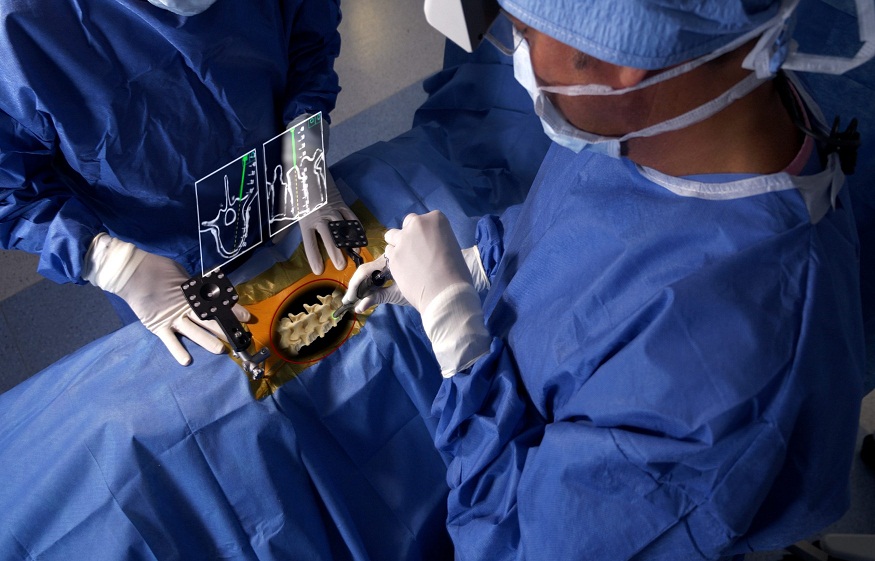
    Advancements in technology, such as 3D printing and robotics, are enhancing surgeons’ ability to apply spinal biomechanics in spinal fusion surgery. 3D-printed models provide detailed, patient-specific representations, aiding preoperative planning and allowing surgeons to tailor their approach to unique anatomical challenges. Robotic-assisted surgery further boosts precision by using real-time imaging and feedback to align implants accurately, reducing the risk of misalignment and mechanical failure. These technologies improve surgical outcomes, minimize complications and ensure better respect for spinal biomechanics.

    Personalized Treatment Plans Based on Biomechanical Principles

    A growing trend in spinal surgery is the development of personalized treatment plans based on an individual’s biomechanical profile. Using data-driven technologies such as artificial intelligence (AI) and advanced imaging, surgeons can create tailored surgical plans that take into account the patient’s history, lifestyle and anatomical differences. AI algorithms analyze past surgeries, patient outcomes and biomechanical data to help predict the best approaches for each unique case.

    By incorporating personalized spinal biomechanics into surgical planning, surgeons can choose the optimal techniques, implants and fusion strategies to improve patient outcomes. For instance, a patient with a history of high-impact physical activity may require a different approach than one with more sedentary habits, as the biomechanical demands on their spine will differ. These personalized approaches ensure that spinal fusion surgery is not only effective but also suited to the patient’s long-term needs and goals.

    The Future of Spinal Fusion and Biomechanics

    The future of spinal fusion lies in further enhancing our understanding of spinal biomechanics and developing technologies that allow for even more precise and individualized care. As minimally invasive techniques continue to evolve, surgeons will be able to perform complex fusions with smaller incisions, less damage to surrounding tissues and faster recovery times. These advancements will be driven by an even deeper understanding of spinal biomechanics and the application of tools like robotics, AI and 3D printing.

    Moreover, innovations in biomaterials may offer new ways to enhance spinal fusion success. Biomechanically adaptive implants, which can adjust to the forces and movements of the spine, could provide greater flexibility and reduce the stress on adjacent segments. These next-generation implants have the potential to improve long-term outcomes and may help minimize the risk of complications.

    Understanding spinal biomechanics is crucial for the success of spinal fusion surgery. By analyzing how the spine moves, bears weight and responds to physical forces, surgeons can make more informed decisions that lead to better outcomes. Dr. Larry Davidson notes that the integration of advanced technologies such as 3D printing, robotics and AI supports greater precision in spinal fusion procedures, helping to address biomechanical challenges and enhance patient care. As our knowledge of spinal biomechanics continues to grow, so will the effectiveness of spinal fusion surgery, offering hope to patients suffering from debilitating spinal conditions.
  • Practicing the art of plastic surgery

    Practicing the art of plastic surgery

    1,130 Views

    Dr. Ali Izadpanah is a certified specialist in plastic surgery from the College of Physicians and Surgeons of Quebec and one of the few Canadian plastic surgeons to be certified in the United States as a diplomat of the American Board of Plastic Surgery.

    Dr. Izadpanah has been praised by his peers and his patients among all plastic surgeons in the Montreal region. Its results are personalized based on the client’s individual anatomy, lifestyle and aesthetic goals.

    Certified by the Canadian and American Board of Plastic Surgery, Dr. Izadpanah completed his training at McGill University, followed by a fellowship in upper extremity reconstruction and microsurgery at the Mayo Clinic and the Burn Complex & Reconstruction Center , followed by cosmetic surgery in Paris, France.

    He has honed his skills and artistic ability in cosmetic enhancement techniques including Brazilian facelift, breast augmentation, abdominoplastic surgery and body contouring.

    Currently, Dr. Ali Izadpanah is a surgical professor at the University of Montreal, director of the regional burn center and responsible for procedural training of fellows.

    Understanding my patients and their expectations is of paramount importance. As a plastic surgeon, my priority is to provide my patients with an exceptional experience when they leave my office. Plastic surgery is where art meets science. It is very important that my patients clearly understand the procedure and the recovery they expect.

    Plastic surgery

    At Dr. Ali Izadpanah’s practice, the science – and art – of plastic surgery is centered on providing individualized care to his patients, combined with a highly detailed and thoughtful cosmetic surgical plan. By specifically customizing each surgery to meet the needs and goals of each patient, Dr. Izadpanah can rejuvenate and enhance your beauty using cutting-edge procedures that will result in beautiful, natural results that will make you look better provided from a more confident to about your appearance.

    Ali Izadpanah offers a comprehensive selection of the most sought-after cosmetic treatments to date in his practice. In addition to having extensive training, his patient-centered approach sets him apart from the competition and provides a personal level of attention. Whether you are looking for non-surgical cosmetic enhancement or a series of procedures, Dr. Izadpanah will customize your treatment plan to best meet your individual needs and goals.

    Her specialty is breast augmentation, mastopexy – breast lift, abdominoplasty, Brazilian butt lift. Additionally, Dr. Izadpanah has special interest in cosmetic surgeries including natural facial rejuvenation, facelifts, endoscopic brow lifts, fat grafting, fillers, toxins, botox, body contouring and a full range breast enhancement procedures.

    Philosophy

    For every patient and every procedure, Dr. Ali Izadpanah is committed to providing a natural, more refreshed appearance. He feels the mark of a superior result is balanced and proportionate to the face and body. Her belief is that a good result should convey a look of subtle, but noticeable change such as a new hairstyle, new makeup application or even weight loss.

    As a patient, you should expect certain qualities that a plastic surgeon should have. They must offer a high level of skills, then training; adopt a patient-centered approach; prioritize your safety and comfort; and understand how to combine medicine and art to provide fantastic, natural results.

    Dr. Ali Izadpanah combines these qualities to provide patients with an excellent level of care and a personalized medical experience. As a plastic surgeon in Montreal, Dr. Izadpanah focuses on cosmetic procedures for the body, face, buttocks and breasts.

    Affiliations and Memberships

    Very active in his profession, Dr Ali Izadpanah is co-author of more than 55 articles published in numerous medical journals and has participated in more than 83 presentations over the years.

    His contributions to the medical field have been recognized on several occasions: he has received more than 36 awards and recognitions during his career.

    A member of several professional associations, Dr. Izadpanah is recognized by the College of Physicians of Quebec, the Canadian Society of Plastic Surgeons, the American Society of Plastic Surgeons and the American Board of Plastic Surgery.

  • Aesthetic and plastic surgery for better aging

    Aesthetic and plastic surgery for better aging

    976 Views

    Whether he is in the operating room, in consultation with his patients or with the residents he teaches, Dr. Karl  Schwarz works to undo the prejudices surrounding plastic surgery. Because when patients tell him that their lives are transformed after going under his knife, he recognizes the immense positive impact that surgery can have.

    What is an XTRA?

    For Dr. Karl Schwarz, the choice  to pursue a specialty in plastic surgery was obvious. It must be said that, before him, his father had distinguished himself as a plastic surgeon. Very early on, Dr. Schwarz  was able to see the art behind surgery: “Plastic surgery is the perfect combination of science, engineering and art,” he summarizes.

    The Montreal surgeon learned his lessons with the greats, notably at Georgetown University Hospital, one of the best plastic surgery residencies in North America. A certified member of the American Board of Plastic Surgery and the Royal College of Physicians and Surgeons of Canada, Dr. Schwarz  contributes to training the next generation in this field which fascinates him.

    By founding Clinique K, the renowned surgeon imagined an ultra-modern practice specializing in plastic and reconstructive surgery, a place where honesty with the patient and the achievement of natural results are prioritized. It is the ultimate compass that guides Dr. Schwarz  . “In my eyes, it is the plastic surgeon’s entire responsibility to ensure that the client understands what is possible and what is not, depending on their physiognomy and the limits of the human body,” explains- he. Our role is also to ensure that their expectations are realistic before going under the knife. » It is not uncommon, moreover, for Dr. Karl  Schwarz to refuse to perform an intervention on a patient.

    It must be remembered that these are cosmetic and elective procedures. The patient must be in good physical and mental health, and the reasons for choosing to have surgery must be well-founded.

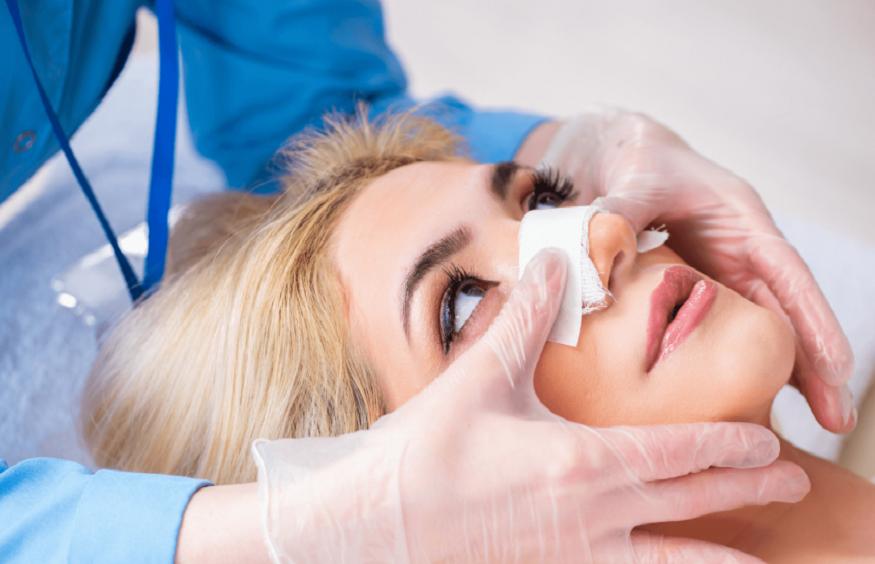
    Although he advocates self-acceptance, Dr. Schwarz  is at the forefront of measuring the positive impact that surgery can have on the men and women who choose it. Sometimes considered frivolous, certain interventions can nevertheless change lives. “When a young girl has been self-conscious about her nose all her life, for example, rhinoplasty can help her gain confidence and relate to others,” illustrates the surgeon.

    However, it is when he works in reconstructive surgery that his work takes on its full meaning. Whether we think of breast reconstruction for breast cancer survivors or facial reconstruction after trauma, these surgical procedures often help the patient progress through the recovery process. In Canada, Clinique K is one of the rare private practices to offer breast reconstruction privately.

    Some women proudly wear their mastectomy scars as a badge of honor and I have great respect for them. For others, reconstructive surgery is part of the path to recovery. When they tell me that their lives are transformed after the operation, it gives meaning to what we do here.

    The human factor

    When we ask Dr. Schwarz  what explains Clinique K’s reputation for excellence, the answer is not long in coming: the team. “It is the human factor that limits the risks for the patient. It’s the anesthesiologist, it’s the nursing staff in the operating room, those in the recovery room; it is all these humans who ensure the safety of the patients who trust us,” he concludes.